

Weekend thoughts
Some personal background and thoughts on a Friday morning

I come from a middle-class working family in the pulp and paper industry. As a child in Canada, I always wanted to live in the city. Vancouver was, to me, the center of the world. Instead, I grew up in forestry towns far away from it.
Fortunately, my family moved abroad several times, and I lived in Swaziland, Argentina, and South Africa.
As a boy, I remember hearing a radio commentator talk about what I thought were “chairs.” In reality, it was market commentary on the Vancouver Stock Exchange. Nobody around me read the stock pages or could explain the numbers, which only deepened my curiosity. I had an instinctive need to understand what others ignored.
I was fascinated by the nightly News Hour, especially the USD/CAD update just before the weather and sports. I would predict the number in advance, usually incorrectly, but I looked forward to that moment every day.
In 1985, I moved to South Africa to complete high school and attend university. I later worked as a trainee supermarket manager, putting in long hours while studying financial markets at night. I taught myself technical analysis by hand, charting dozens of companies on graph paper, calculating moving averages and indicators manually.
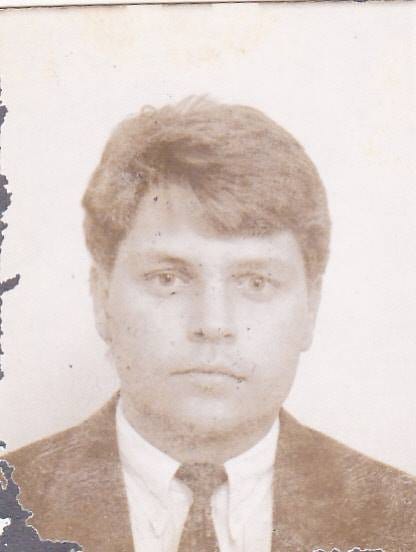
(M.W. Marshalls employee pic 1990)
In 1987, I became a trainee stockbroker. Stockbrokers seemed like kings of the world, and I wanted to be part of it. Along with cold calling and business development, I also worked on one of the first electronic trading initiatives, where investors could dial in through a primitive router to view live prices on the Johannesburg Stock Exchange.
My next step was M.W. Marshall in 1990, the premier interbank broking firm of its time. Marshalls was the J.P. Morgan of the industry, founded in London’s financial district in 1866. It was the heart of global capital flows. The NYSE might trade a volume in 37 days that Marshalls matched daily. It was fast, vast, and never dull.
Brokers wore Hugo Boss suits and carried limitless expense accounts. Fine dining, entertainment, and box seats were all standard. Confidence was a requirement, not an option.
I spent 2.5 years at Marshalls, which gave me the foundation to move onto larger markets.
The next chapter was Singapore.
I arrived on March 10, 1993, knowing no one. I carried a strong recommendation letter from the Chairman of Marshalls London to the Singapore head office, but the meeting went poorly. The manager dismissed me and told me I would never succeed there.
I turned to Plan B.
Astley & Pearce, another London firm, welcomed me warmly. Despite arriving without an appointment, I was interviewed and offered a role within hours. That began a 16-year career at ICAP, where I thrived, built lifelong friendships, and gained invaluable experience.
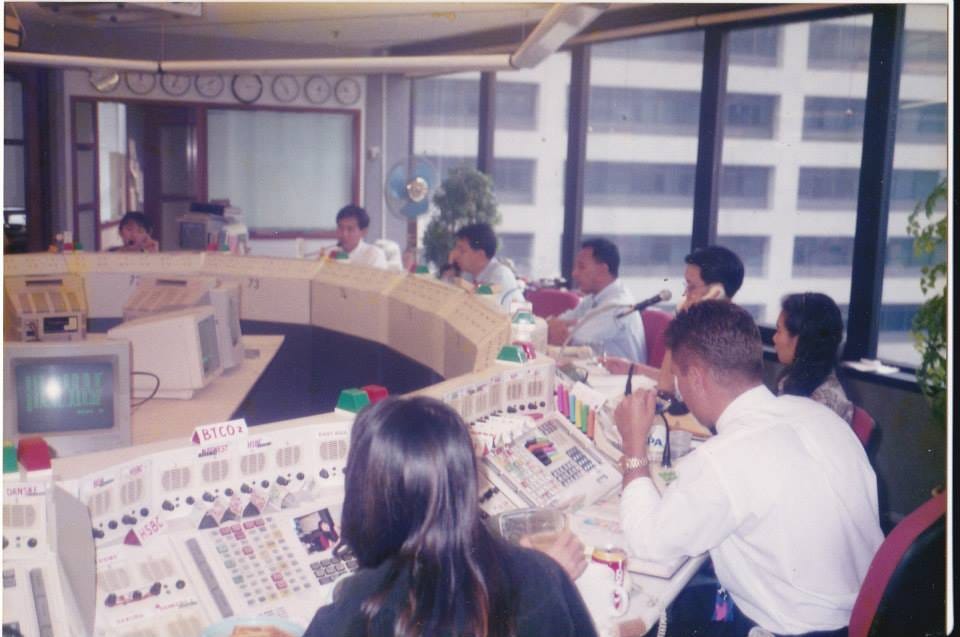
(AP USD/DEM desk 1996)
Today, I sit on my balcony with a coffee, reflecting on that journey.
I no longer work in a trading room with a dozen squawk boxes relaying billion-dollar deals. Instead, I work in what is conceptually a simpler industry: providing clients with tailored access to their desired assets, within frameworks of capital protection, regulatory alignment, and sustainable performance.
The principle has not changed: we only succeed if our clients succeed consistently.
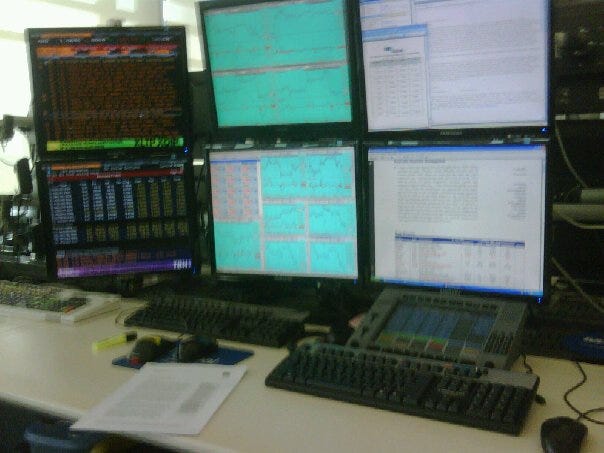
(MF Global desk 2010)
In broking, my mentor taught me a rule in 1990: Know your client. Not only their trading style, but their life. Their family’s names, their anniversaries, their favorite wine or restaurant. It meant booking their favorite table a week in advance, with the right flowers and wine waiting.
Times have changed, but the essence has not. Genuinely caring about the client’s interests is timeless.
At our firm today, we do not sell products. We architect solutions. Every structure is designed around the client’s objectives, not our inventory. The real reward is delivering exactly what they want: exposure to their chosen assets, protected by an A-rated FINMA-regulated bank, with meaningful upside participation and limited downside risk.
This is the essence of our work in 2025. The markets and tools may look different from 1990, 1993, or even 2020, but the foundation is the same: relationships, trust, and aligned outcomes.
Wishing you all a fantastic, healthy, and active weekend ahead.